

Quick answer: A used automatic car that delays engaging Drive, flares engine RPM without corresponding acceleration, or shifts harshly may have a significant problem—but no single symptom proves a transmission must be replaced. Engine faults, mounts, control software, fluid concerns and different transmission designs can create overlapping sensations. Modern automatics, dual-clutch units and continuously variable transmissions behave differently by design. The buyer’s goal is to describe the behavior, collect service history and obtain a professional diagnosis before taking on a potentially expensive risk.
Editorial standard: This is original research-led buyer guidance, not a claim of hands-on vehicle testing. Confirm model-specific requirements with primary documents or a qualified professional.
Recognize what drivers call slipping
In everyday language, slipping may mean rising engine speed without a matching increase in road speed. In a conventional automatic that can indicate a power-transfer concern, but a CVT can legitimately hold engine speed relatively steady or high under acceleration. A dual-clutch transmission can also have characteristic low-speed behavior.
Compare expected operation from the exact owner’s manual or a known-good comparable car. Do not label every unfamiliar noise or engine-RPM pattern as transmission failure. Record whether the symptom occurs hot, cold, under light throttle or only during a particular gear change.
Delay from Park to Drive warrants review
Some automatics engage promptly after selecting Drive or Reverse; an excessive pause, hard thump or repeated need to select a gear can deserve diagnosis. Electronic controls, hydraulic pressure, engine idle behavior and mechanical components may all contribute.
During normal authorized testing, allow a full stop before changing gear direction and use manufacturer driving instructions. Never repeatedly force shifts or perform high-load stall tests in a seller’s car. Ask a specialist to assess abnormal delays rather than creating damage to prove a point.
Harsh shifting does not identify the bad part
A firm shift can be normal in some modes or performance calibrations, while an unexpected bang, jerk or repeated flare may be abnormal. Transmission mounts, adaptive shift controls, engine misfires and degraded fluid can sometimes influence perceived shift quality.
A diagnostic scan may show relevant powertrain codes, but absence of codes does not establish perfect operation. A technician needs to review actual symptoms, service information and approved tests. Do not accept a seller’s statement that a fluid change will certainly cure an unknown internal fault.
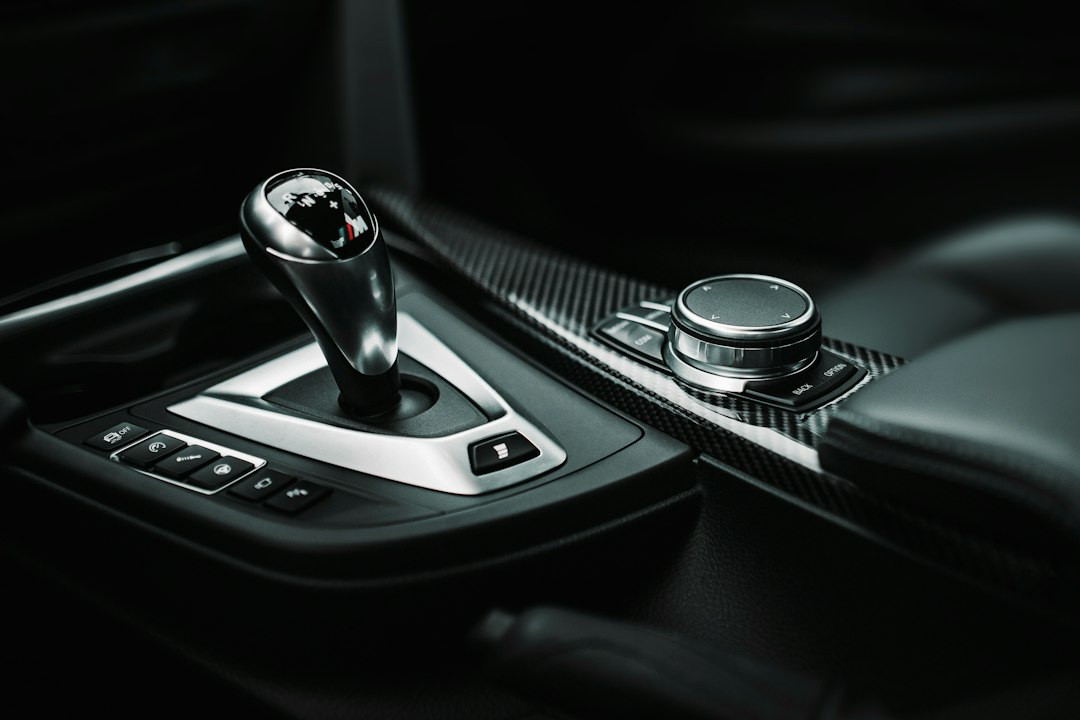
Transmission fluid inspections are design-specific
Some cars have accessible dipsticks, while others use manufacturer-specified fill and level procedures at particular fluid temperatures. Fluid color or odor can be a clue in some designs but not a definitive diagnosis. Incorrect fluid or an improper service procedure may damage the unit.
Do not open a sealed transmission or add a generic product in a seller’s car. Request invoices showing the correct fluid specification, work date, mileage and shop. Check whether the manufacturer recommends fluid changes under severe use, towing or commercial duty.
Maintenance records affect risk
Look for evidence of documented transmission service, previous repairs, software updates or factory campaigns. A car that has experienced repeated overheating, towing beyond rated limits or aggressive operation may deserve additional scrutiny, but ownership stories are not proof.
The important evidence is the actual VIN, specific transmission generation and qualified inspection. Our maintenance records guide explains how to distinguish real invoices from undocumented assurances.
Know when a test drive is insufficient
Some faults appear only when hot or during extended driving; others are intermittent and may not reproduce during a short dealership loop. Ask the mechanic what conditions were observed, which systems were examined and where uncertainty remains.
Do not attempt unsafe freeway accelerations, hard launches or deliberate abuse to produce a fault. A proper transmission specialist can suggest authorized controlled tests and document their limits. Safety comes ahead of satisfying a curiosity about shifting.
Repair quotes must identify the suspected failure
Costs vary from software programming or a sensor issue to internal overhaul or full replacement, and each has different evidence and warranty implications. A diagnosis may require further testing before a firm quote. Ask what is confirmed versus suspected, whether the part is new or remanufactured, and which labor is included.
A generic transmission-rebuild internet price is not a reliable discount amount. Compare the real installed estimate, vehicle value and the risk that additional work may be discovered. Some repairs also require relearn and calibration steps.
When to reject the purchase
An active severe shift fault, unexplained slipping, transmission warning or refusal of inspection is a strong reason to consider another vehicle. If a seller repairs the issue first, ask for an invoice and independent recheck rather than treating the cleared dash lamp as proof.
Use the CVT versus automatic comparison and our test-drive guide to complete the evaluation. The best car is the one with a transparent condition and costs you can reasonably afford.
Practical decision table
| Observation | Possible issue | Buyer response |
|---|---|---|
| RPM rises without acceleration | Power transfer or operating-mode behavior | Qualified diagnosis |
| Delayed gear engagement | Control, hydraulic or wear issue | Document and inspect |
| Harsh shift | Several powertrain causes | Specialist scan and drive |
| Fluid leak | Seal or component fault | Find source and cost |
| No symptom during short drive | Limited evidence only | Review history and inspection |
Use the table with actual vehicle records, test scope and written costs instead of assuming a symptom proves a particular failure.
Frequently asked questions
Does high RPM always mean transmission slipping?
No. CVTs and other designs can have different normal operating behavior.
Will changing transmission fluid fix slipping?
Not necessarily. Diagnosis must establish the cause.
Can a transmission fail without a dashboard code?
Yes. Mechanical faults are not always represented by accessible codes.