

Quick answer: The out-the-door car price is the actual transaction total you should compare before visiting multiple dealerships. It incorporates the agreed vehicle price plus dealership charges and relevant government taxes and registration costs, minus applicable credits. Advertised prices can hide important conditions, while optional products can appear late in negotiations. Comparing written totals prevents a cheap headline from turning into a costly purchase.
This Car Focus guide provides a buyer-focused process with concrete checks and primary sources, rather than a universal score or unsupported guarantee.
Request the complete quote in writing
Send the dealer a specific VIN or stock number and ask for an itemized out-the-door quote. Have them separate vehicle selling price, document or preparation fees, accessories, dealer-installed products, government taxes, title and registration charges, and trade-in terms. Request the price without optional finance or protection add-ons. The FTC recommends written out-the-door prices to confirm a vehicle is available and expose fees before you arrive. Keep all versions of the quote.
Understand what the total should include
Applicable sales tax, title and registration charges vary by jurisdiction; there is no single nationwide percentage. Some dealership fees may be standard business practices, but that does not mean they should be hidden or omitted from your comparison. A discount that requires special financing or membership must be shown clearly. Compare quotes only after verifying that the model year, trim, mileage, condition and warranty terms are substantially equivalent.
Separate mandatory charges from optional products
Products such as extended service contracts, vehicle tracking, paint protection, VIN etching and tire coverage may be offered as optional add-ons. Ask which items are required by law, which are dealer-imposed and which can be removed. Review the written contract, exclusions and cancellation terms for each product you consider. The CFPB notes that many add-ons and loan features are negotiable, while government taxes and registration charges are usually set by law.
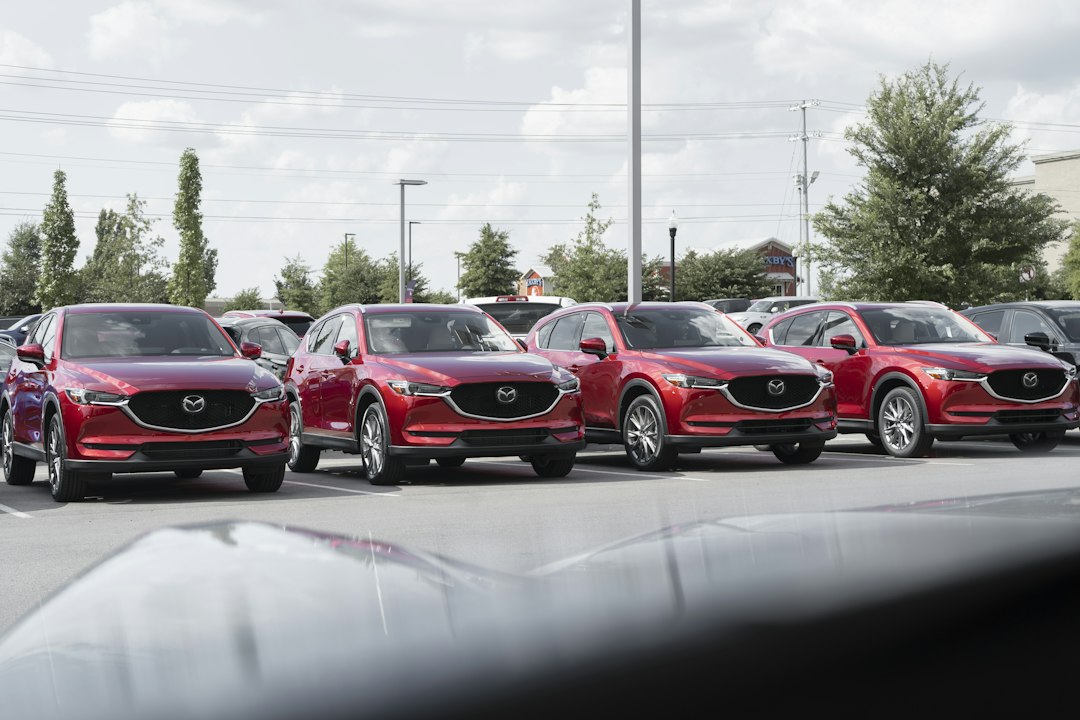
Illustrative example: why advertised price is misleading
Suppose Dealer A advertises a car for $18,500 but adds a $950 dealer fee and $1,200 in unwanted products. Before government charges, that total is $20,650. Dealer B advertises an equivalent car for $19,200, adds a $500 dealer fee and no extra products. Its comparable pre-tax total is $19,700. Dealer B is $950 cheaper despite the higher listed price. The numbers are illustrative only, not current market averages or predictions.
Keep trade-in and financing calculations separate
You need to understand three prices: the purchased vehicle, your trade-in and your loan. Record the trade-in allowance alongside any remaining balance owed. Then compare separately the amount financed, APR, term, finance charges and monthly payment. Bundling everything into one payment makes it harder to detect whether a lower monthly bill came from a better sale price or a longer loan. A longer loan can increase total interest and negative-equity risk.
Do not rely on spoken warranty promises
For covered U.S. used-car dealer sales, review the FTC Buyers Guide and whether the car is sold with warranty coverage or as-is. Ask for every negotiated repair promise, condition or warranty change in writing. A return policy should also be requested and reviewed rather than presumed. Federal law generally does not create an automatic three-day cancellation right for a vehicle purchased at a dealership; state-specific protections and contractual policies may differ.
Use a side-by-side comparison before signing
Create a worksheet with rows for VIN, advertised price, negotiated price, fees, add-ons, tax, registration and final total. Compare each lender proposal on another sheet. Confirm that the signed contract matches the agreed quote and that unwanted products are removed. If a new charge appears, stop and ask for a complete explanation. Read Car Focus’s used-car price-trend guide to compare the resulting number with market context.
Decision comparison table
| Quote line | What to compare | Buyer action |
|---|---|---|
| Negotiated vehicle price | Same trim, VIN, age and condition | Request a dated written price |
| Dealership fees | Document, prep, delivery and other charges | Ask what is negotiable |
| Optional products | Service plans, protection or accessories | Approve or reject individually |
| Government charges | Applicable title, registration and tax | Confirm jurisdiction |
| Final total | Out-the-door figure | Compare complete quotes |
Use the table as a starting framework, and record actual findings and written quotes for your own vehicle.
Buyer checklist
- Write down the exact VIN, model year and what is verified.
- Keep the written quote, report or inspection record with your decision file.
- Compare your options on the same criteria before making a commitment.
- Use qualified professional evaluation for concerns outside your expertise.
Frequently asked questions
Is out-the-door price the same as monthly payment?
No. Financing may add interest and other borrowing charges beyond the transaction total.
Can I get an out-the-door quote by email?
Yes. Request a dated, itemized written quote before visiting.
Are all dealer fees illegal?
No. Their legality and disclosures depend on applicable rules. Assess them as part of the whole deal.
Primary sources and methodology
Car Focus uses public consumer guidance and a structured buying framework. This article does not represent hands-on testing of a particular vehicle.
Related Car Focus reading: Used-car buying framework, reliability research, and ownership-cost planning.