Quick answer: All-wheel drive can help a vehicle accelerate when available traction is limited, while front-wheel drive often offers a simpler package with fewer driveline parts. But AWD does not cancel the laws of traction, reduce stopping distance by itself, or replace suitable tires. When choosing between used cars, compare the exact system design, winter driving needs, service history and costs rather than paying for an AWD badge alone.
Car Focus compares documented specifications and practical buyer questions. This article does not claim hands-on vehicle testing or certify the condition of any particular car or truck.
Understand what the drivetrain actually does
A front-wheel-drive car sends propulsion primarily to the front wheels. An all-wheel-drive system can distribute driving torque to more than one axle, but the design and control logic vary. Some operate continuously, while others engage an additional axle as conditions demand. Read the manufacturer information for the specific model year, because terms such as ‘intelligent AWD’ can describe very different hardware.
Neither label tells you the quality of the suspension, stability-control calibration, tires or brake performance. Two compact SUVs with AWD can behave differently in the same snow. Conversely, a well-equipped FWD sedan with suitable winter tires may meet your real travel needs better than a more expensive AWD crossover.
Acceleration is not braking
AWD can provide extra opportunities to transmit engine or motor torque during acceleration, particularly on slippery surfaces. However, all four tires must still generate grip for turning and braking, regardless of which wheels are driven. AWD does not grant a special stopping-distance advantage on ice by itself. Tire compound, road condition, speed, driver judgment and braking systems remain critical.
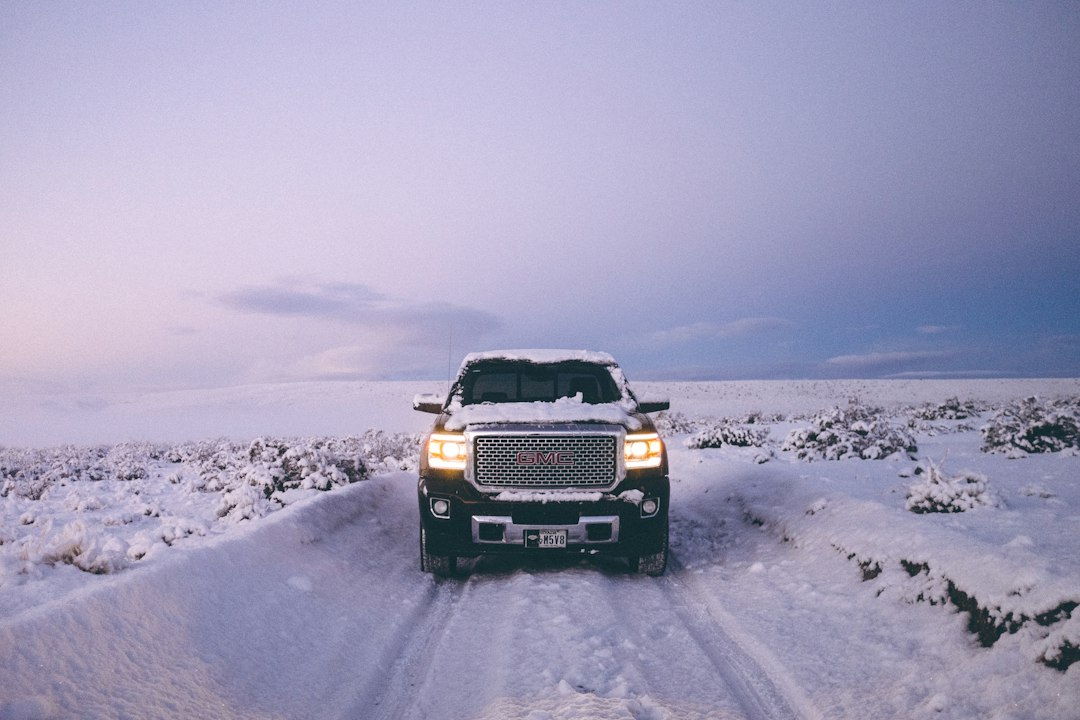
Do not interpret a snowy-road advertising photograph as proof that a specific model is safe at any speed. The National Highway Traffic Safety Administration emphasizes appropriate tires, maintaining traction and adjusting to road conditions. A safe winter plan includes more following distance, slower speeds and knowing when not to drive.
Tires may matter more than the drivetrain badge
For frequent freezing or snow, inspect the manufacturer’s approved tire specifications and the condition of tires installed. Winter tires use compounds and tread designed for colder, slippery conditions. An AWD car on inappropriate, worn or mismatched tires can still be difficult to stop or steer. NHTSA’s TireWise resources explain checking pressure, tread and tire aging.
Many AWD systems are sensitive to differences in tire circumference across the axles. Some manufacturers specify closely matched tire tread depth or replacing tires in sets. Do not assume a replacement policy based on one forum post—check the exact vehicle manual. Tire costs can be a meaningful part of long-term AWD ownership, especially with uncommon wheel sizes.
Fuel economy and maintenance differences
AWD hardware may increase weight and friction, but efficiency differences depend on design, hybridization and vehicle configuration. Compare the exact AWD and FWD trims on FuelEconomy.gov rather than applying a fixed penalty. If an AWD variant adds a turbo engine or larger wheels, those differences complicate a simple comparison. Use annual mileage and your actual fuel price for a sensible estimate.
Maintenance can include differentials, transfer units, prop shafts and other components not present in the corresponding FWD system. Some designs have special fluid intervals and tire-matching rules. Before buying used AWD, review service records for the exact driveline and inspect for leakage, shuddering or warning lights with a qualified mechanic.
Ground clearance and four-wheel drive are different questions
A crossover with AWD is not automatically built for off-road driving. Ground clearance, tire type, approach and departure angles, underbody protection, suspension travel and manufacturer limits matter. Similarly, some body-on-frame trucks use part-time four-wheel drive with operating restrictions that differ from passenger-car AWD. Never assume a four-wheel-drive selection can be left engaged on dry pavement unless the owner’s manual allows it.
For steep unpaved driveways, frequent mountain travel or job sites, evaluate the actual terrain and manufacturer capability. Don’t pay for towing or off-road features you rarely need. Where winter roads are routinely cleared, FWD with suitable tires may be completely adequate for many drivers.
Pre-purchase checks for an AWD system
Confirm that the listing accurately identifies AWD or FWD. Run the VIN through manufacturer information and inspect the controls. Ask the seller whether any AWD warning lights appeared, whether tires were replaced together, and whether the driveline fluid schedule was followed. During a safe test drive, note abnormal binding, grinding or vibration at modest turning speeds; do not intentionally force the drivetrain into damaging conditions.
A professional inspection should consider underbody damage, differential leaks, axle boots and tire condition. A scanner may reveal stored codes but cannot alone guarantee that all components are sound. Be careful with modified ride heights, oversized tires or undocumented changes, especially when the vehicle will be used for long highway trips.
Build a real cost comparison
Compare two similarly equipped models with the same model year and powertrain where possible. Record sale price, fuel economy, tires, insurance, maintenance and the likelihood of needing more traction. If you drive 95 percent of the time on dry roads, a substantial AWD price premium deserves scrutiny. If you regularly face unplowed rural roads, the added capability may be valuable without being a safety guarantee.
Pay attention to safety and inspection data rather than the slogan ‘safer with AWD.’ Review sedan versus SUV tradeoffs and our vehicle comparison guide for the non-drivetrain factors that might matter more.
Choose tires and behavior for the worst expected conditions
The best option is not necessarily the most mechanically complex. Choose the vehicle and tire setup whose documented capability aligns with your route, climate and realistic upkeep budget. Plan a winter maintenance check of tire age, tread, pressure, wipers, lights, cooling system and emergency supplies.
If you are shopping used, the condition of the individual vehicle remains a decision gate. AWD adds no value when the car has neglected driveline service, poor tires or serious mechanical faults. A well-maintained FWD vehicle can be a wiser purchase than a compromised AWD example.
Buyer comparison worksheet
| Buyer question | FWD | AWD |
|---|---|---|
| Winter acceleration | Depends strongly on tires | Can help distribute driving torque |
| Braking | Tires and brakes determine traction | Same basic traction limits |
| Driveline maintenance | Usually fewer AWD-specific parts | May add differential/transfer service |
| Tire replacement | Follow manufacturer spec | Check matching-tire tolerances |
| Fuel economy | Compare exact trim | Compare exact trim |
Record the facts for the exact vehicle and obtain professional verification for unresolved safety or mechanical concerns.
Optional shopping resource: Automotive tire, winter-driving and equipment options may be useful after you verify fit. The links below may generate an affiliate commission.

Frequently asked questions
Will AWD help me stop faster on ice?
Not inherently. Braking grip depends primarily on tires, road conditions, speed and brake systems.
Do all AWD cars need four tires replaced at once?
Not universally. Check the specific manufacturer’s tread-depth and matching requirements.
Is FWD always cheaper?
Not always. Compare actual examples, financing, tires, fuel and maintenance.
Sources and research notes
Primary sources and official consumer information support the general framework. Vehicle-specific maintenance and capacity data must be checked in manufacturer documents.