
Quick answer: A used-car test drive should follow a safe, repeatable route that lets you check start-up behavior, steering, braking, transmission response, cabin equipment and ordinary cruising. Record what you actually observe, then arrange an independent inspection for any serious candidate. A 15-minute test drive is a screening tool, not a mechanical warranty.
This step-by-step test-drive checklist is designed for an ordinary U.S. used-car shopper. It is not a substitute for the owner’s manual, safety inspection or a technician’s diagnosis. Never perform dangerous maneuvers, disable safety equipment or use your phone while driving.
Before the drive: agree on a safe route
A useful used-car test drive starts before the engine turns over. Ask the seller whether the vehicle can be driven legally, what insurance arrangements apply, and whether there are route or time restrictions. Bring your driver’s license as required, but avoid handing over unnecessary personal information. Plan a mix of neighborhood streets, moderate-speed roads, gentle turns, safe braking and parking maneuvers. If appropriate and permitted, include highway driving; do not take a vehicle on a route the seller has prohibited.
Ask to see the car at normal ambient temperature when practical. A vehicle that has already been warmed up can feel different at startup, although that alone does not imply deception. Take notes while parked or ask a passenger to write them—never use a phone or fill out a checklist while driving. Your job is to notice how the car behaves, not diagnose it or force faults to occur.
Minute 0–3: inspect the cabin and start-up
Before moving, adjust the driving position and check visibility from all mirrors. Test the seat, steering wheel adjustments, seat belt, horn, turn signals, windows, locks, rear camera and parking sensors if equipped. A missing safety feature, damaged restraint or malfunctioning light deserves attention before proceeding. Confirm that the equipment listed in the advertisement actually exists on this trim and functions; visually similar cars may have different packages.
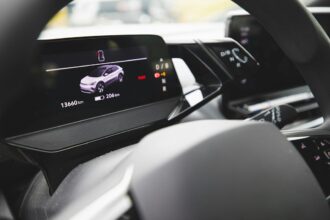
Turn the ignition on and watch the dash. Many warning lamps briefly illuminate during a normal bulb or system check, and then go out after startup. The exact sequence depends on the vehicle; consult its owner’s manual. If a check-engine, ABS, airbag, oil-pressure or temperature warning stays lit unexpectedly, do not simply accept that it ‘always does that.’ Ask the seller to arrange professional diagnosis. A steady or flashing warning light is information, not a diagnosis by itself.
Minute 3–6: listen, steer and drive at low speed
Accelerate gently and notice engine response, hesitation, uneven idle, drivetrain vibration and unusual noises. In an automatic transmission, shifts under modest throttle should broadly match the manufacturer’s normal operation; hybrids and continuously variable transmissions may behave differently from a conventional geared automatic. If the vehicle pulls sharply, clunks repeatedly or vibrates, document the circumstances. A single sensation does not establish the cause, but it gives the mechanic a reproducible complaint to investigate.
Choose a safe empty area to make normal parking-lot turns, check the turning circle and listen for rattles or clicking that occur only when the steering wheel is turned. Repeated clicking can have several causes, including driveline components, but do not decide the repair from sound alone. Try a moderate incline if it occurs naturally on the route; hill starts can reveal behavior you may not notice on level pavement.
Minute 6–9: brakes, ride and straight-line tracking
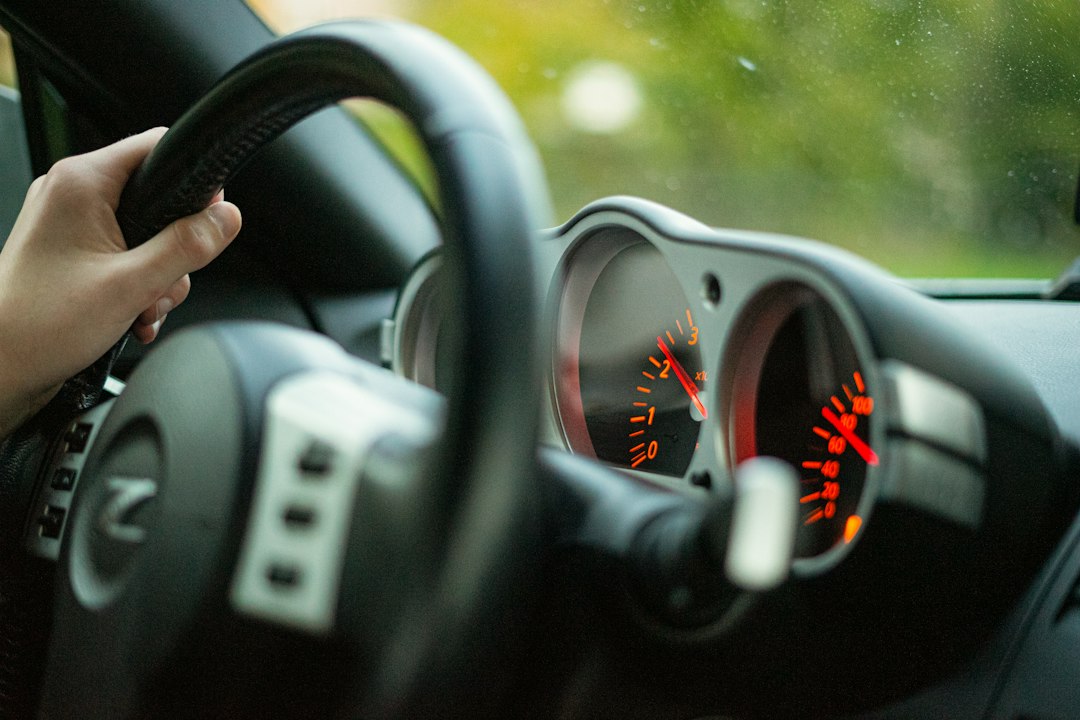
On a clear road with ample space, apply the brakes gradually at a normal stopping point. Observe whether the pedal feels consistent, the car tracks straight, and unusual grinding, pulsing or steering shake occurs. Avoid panic stops or deliberately triggering ABS during a seller’s test drive. Brake feel varies across gasoline, hybrid and electric vehicles, including regenerative systems, so compare with the manual and a professional evaluation rather than applying one universal expectation.
Drive over ordinary pavement without seeking out potholes or hazards. Notice repeated suspension knocks, harsh jolts, persistent tire roar and body vibration. Roads vary, which is why comparing two vehicles on similar routes is useful. Check whether the steering wheel is level during straight driving and whether the vehicle drifts while holding a safe steady course. Do not let go of the wheel to perform a supposed alignment test.
Minute 9–12: operating temperature and normal cruising
As the car warms, check for unusual odors, rising temperature warnings, power loss or repeated vibration at a consistent speed. Do not open a hot cooling system, inspect moving belts, or touch high-voltage EV components. A vehicle may respond differently with the air conditioner running; test the A/C and heating during parked segments if the owner permits. When appropriate, use normal highway merging and cruising to assess noise, comfort, visibility and driver confidence.
For a hybrid, pay attention to transitions between electric and gasoline operation without claiming that one noticeable transition proves a fault. For an EV, assess accelerator modulation, regenerative braking settings and range-display behavior, while remembering that displayed range is an estimate influenced by conditions and previous driving. If warning messages occur, photograph them only after the vehicle is parked safely.
Minute 12–15: parking, reverse and final walkaround
Park in a normal space and test reverse gear, backup camera, visibility and low-speed maneuvering. Confirm the parking brake engages and releases properly according to the manual. After shutting down, look below the vehicle for fresh leaks or strong odors, but remember that clear water from air-conditioning condensation can be normal. Compare what the seller told you with what actually happened. If you hear a fault, write down the speed, road surface, steering angle and whether braking or acceleration was involved.
A 15-minute route is only a compact screening process, not an upper limit. Request more time when it is necessary to evaluate the car safely and reasonably. Some faults are intermittent, while others will never appear on a short drive. The next step for a serious candidate is an independent, vehicle-specific inspection—not negotiating from a symptom you cannot diagnose.
Test-drive notes: match symptoms to follow-up questions
Use the worksheet below to separate direct observation from possible causes. ‘Steering vibrates between 45 and 55 mph’ is an observation. ‘Needs a $75 wheel balance’ is an unverified diagnosis and estimate. Ask a qualified technician to identify whether tires, wheels, suspension or another system may be responsible. This distinction protects you against accepting the wrong repair or misrepresenting a fault to the seller.
Also record the vehicle’s exact VIN, odometer reading, weather, driving route and whether the vehicle was cold or warm. If you drive more than one candidate, compare the same features on similar routes. The result is a traceable evidence sheet instead of a vague memory that one car ‘felt better.’
When to stop the drive and when to walk away
If a serious safety concern develops—such as a critical warning, strong burning smell, brake malfunction, alarming steering behavior, overheating or obvious tire failure—pull over safely as soon as possible and end the drive. Do not keep driving to see whether the problem improves. Contact the seller and arrange appropriate recovery or technician evaluation. If the seller tries to pressure you to ignore a safety defect, reassess whether this is a transaction worth continuing.
Lack of maintenance documents, unusual body repairs and a seller’s unwillingness to allow an independent inspection may not individually prove wrongdoing, but the combined uncertainty can make a vehicle unsuitable. The FTC advises an independent mechanical inspection even for vehicles advertised as certified. A test drive complements that inspection; it cannot replace it.
How to turn the drive into a buying decision
Assign each observation one of three outcomes: pass, needs verification, or fails a requirement. Give priority to safety, mission fit and costs before comfort preferences. A used vehicle that drives pleasantly but has a missing title or unresolved safety defect is not rescued by its smooth ride. Conversely, one small cosmetic rattle may be less important than a complete service history and a strong independent inspection.
Keep your test-drive notes with the history report, VIN recall lookup, insurance quote and out-the-door price. See Car Focus’s used-car buying framework, reliability research guide, and side-by-side car comparison framework. This creates a consistent decision file you can revisit before signing.
Printable 15-minute test drive scorecard
| Stage | What to observe | Record |
|---|---|---|
| Before start | VIN, cabin controls, tires and visibility | Pass / Investigate / Fail |
| 0–3 minutes | Dash warning lamps, start-up noises, HVAC | Pass / Investigate / Fail |
| 3–6 minutes | Low-speed steering, acceleration, shifting | Pass / Investigate / Fail |
| 6–9 minutes | Braking, road noise, ride, tracking | Pass / Investigate / Fail |
| 9–12 minutes | Cruising, temperature, vibration | Pass / Investigate / Fail |
| 12–15 minutes | Reverse, parking, post-drive leaks | Pass / Investigate / Fail |
| After drive | Independent inspection and repair estimates | Pass / Investigate / Fail |
Optional car-tech resources: The following shopping card may include affiliate links. Accessories do not replace a professional vehicle inspection.

Frequently asked questions
How long should a used-car test drive be?
Fifteen minutes is a practical minimum screening framework, not a universal adequate test. Ask for enough time to safely assess the routes and conditions important to your ownership. A detailed inspection remains separate.
Can a smooth test drive mean the car is reliable?
No. Many expensive faults do not appear on a short trip. Check service history, recalls, title records, and the findings from an independent mechanic.
Can I test the brakes hard?
Do not intentionally perform emergency or aggressive maneuvers on a seller’s car. Observe ordinary safe braking and ask a professional to test unusual behavior.
Should I test drive a car with warning lights on?
Do not ignore critical safety or mechanical warnings. Seek clarification and professional assessment before deciding whether the car is safe to operate.
Sources and editorial method
- FTC: Buying a Used Car From a Dealer — vehicle-history and independent-inspection requirements and buyer guidance.
- NHTSA: Driver Assistance Technologies — definitions and limitations of safety systems.
- NHTSA: Recalls — VIN-based safety-recall verification.
Editorial note: This is a consumer research framework. Car Focus did not perform a hands-on road test of an individual used vehicle for this article.