
Quick answer: A used-car pre-purchase inspection checklist works best as a sequence, not a quick walk around the lot. Use these 30 checks to identify warning signs, organize questions for the seller, and decide whether a qualified independent mechanic should examine the vehicle before you pay. A checklist helps you spot issues; it does not certify that a car is safe or mechanically sound.
What you will learn: This Car Focus guide gives you a repeatable buyer workflow, red flags worth investigating, and next actions you can take before committing money.
Before you see the car: confirm identity and paper trail
Ask for the VIN, exact trim, mileage, title status and service history before spending time on a visit. Decode the VIN using NHTSA’s VIN decoder and check open safety recalls using the official recall lookup. Record the asking price and ask whether there are required dealer charges or optional add-ons. If the seller avoids basic identifying details, do not rush to an appointment.
- 1. Match the VIN on the listing to the windshield and door label.
- 2. Check seller identity and the name on the title or dealership paperwork.
- 3. Review reported title brands, mileage history and major loss records.
- 4. Check open recalls for the exact VIN.
- 5. Ask for maintenance records, recent repairs and known faults.
- 6. Get the out-the-door price in writing for a dealer sale.
Walkaround: paint, panels, glass and lighting
Inspect the car outdoors in daylight with the body clean and dry. Walk every side at a consistent distance, then look closely at panel gaps, bumper fitment, paint texture and weather seals. A single repainted panel is not necessarily disqualifying; inconsistent structural repairs, water intrusion or undeclared damage deserve a professional explanation. Photograph anything you will want to compare with the seller’s disclosure.
- 7. Compare paint shade and finish on adjacent panels.
- 8. Check door, hood and trunk gaps for unusual alignment.
- 9. Look underneath for damaged splash shields, leaks or severe corrosion.
- 10. Inspect windshield glass for cracks or spreading chips.
- 11. Test every exterior light, turn signal and brake light.
- 12. Look for moisture or condensation inside lamp housings.
Tires, wheels, brakes and underbody
Tire condition reveals both near-term expense and clues about alignment or suspension. Check all four tires for matching size and suitable specifications, noting tread wear across inner and outer shoulders. Wheels should not have obvious cracks or bends. Rust that is cosmetic is different from corrosion affecting structural members or brake lines; leave that distinction to an experienced inspector if you are uncertain.
- 13. Check tread depth and uneven wear.
- 14. Record tire brand, size and manufacturing-date code.
- 15. Check for sidewall bulges, cuts and visible cords.
- 16. Check wheels for damage and missing fasteners.
- 17. Look through the wheel for obvious brake wear or fluid traces.
- 18. Inspect visible suspension and underbody parts for damage.
Cabin and electronics: test the equipment you will use
A spotless interior does not prove good maintenance, but cabin faults can reveal expensive or persistent problems. Operate climate controls with both heating and cooling, power windows, locks, seat adjustments and infotainment. Inspect floor carpet and trunk areas for stains, dampness or unusual odors. Some warning lamps illuminate briefly at startup as part of a self-check; they should behave according to the owner’s manual rather than simply being ignored.
- 19. Confirm the odometer matches the documents.
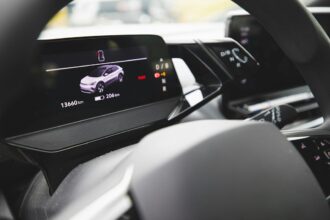
- 20. Start the car and watch for warning lights that stay on.
- 21. Test heating, cooling, defogging and fans.
- 22. Operate windows, mirrors, locks and seat controls.
- 23. Check seat belts, child-seat anchors and seat condition.
- 24. Examine under mats and in the spare-wheel well for water signs.
Test drive and final decision
Only drive with the seller’s permission and when the vehicle is legal and safe to operate. Try low-speed turns, normal acceleration, braking, steady highway-speed cruising where practical and parking maneuvers. Note pulling, vibration, unusual shifts or smells; do not diagnose a mechanical fault from one sensation. The point of a test drive is to identify what needs investigation, not to replace a lift inspection.
- 25. Observe cold start behavior when reasonably possible.
- 26. Test steering alignment and low-speed turns.
- 27. Listen for knocking, grinding or recurring vibration.
- 28. Observe braking feel and pedal response.
- 29. Check transmission behavior across normal driving situations.
- 30. Arrange a written independent inspection before a final commitment.
The mechanic’s inspection is the non-negotiable second layer
The Federal Trade Commission advises that vehicle-history reports do not substitute for a mechanical inspection, even for dealer-certified vehicles. Ask the technician to document leaks, brakes, tires, suspension, diagnostic codes, cooling system, charging system and visible collision or flood repair. Ask which faults require immediate attention, which are routine upkeep and what further diagnosis would cost. A seller refusing any workable independent inspection option is a major reason to reconsider.
Turn observations into a purchase decision
Create three columns: confirmed facts, questions for the seller and potential expenses. Obtain realistic repair estimates instead of subtracting a guessed amount. Compare the inspected vehicle with another actual listing, accounting for mileage, condition, service history and warranty terms. For the broader selection process, read our used-car buyer framework and ownership-cost planning guide.
Optional shopping resource: Related car-tech tools, when relevant to your inspection. Car Focus may benefit from qualifying purchases.

Frequently asked questions
Can I inspect a used car myself?
You can perform a useful first-pass checklist, but you cannot reliably rule out mechanical, structural or electronic problems without appropriate training, equipment and access.
Does a clean vehicle-history report replace an inspection?
No. Unreported accidents, maintenance gaps and mechanical issues may not appear. Use both records and an independent examination.
What if the seller refuses an inspection?
Ask whether a licensed mobile inspector or another mutually acceptable option is permitted. If there is no reasonable way to inspect it, consider walking away.
Sources and research notes
Car Focus separates cited consumer guidance from our practical decision framework. These resources help verify the key procedures and definitions; no vehicle was personally inspected for this article.
Related research: How to choose a used car · Recall checks · Reliability research.