Short answer: treat reliability as an evidence stack, not a score. Start with the exact generation and powertrain, separate safety recalls from durability problems, look for repeated failure patterns, judge severity and repair consequence, then verify the condition and maintenance history of the specific vehicle.
A one-number rating can be useful as a screening signal. It becomes dangerous when it erases differences between model years, trims, engines, transmissions, mileage, maintenance, and the cost of the problems behind the number.
Start with the exact generation, not just the model name
A nameplate can stay in production for decades while the underlying vehicle changes repeatedly. Engines, transmissions, electronics, safety systems, body structure, and suppliers can change between generations and even during a mid-cycle refresh.
Before comparing reliability information, identify the generation and the model years inside that generation. Car Focus treats that as the basic research unit because it prevents problems from one era from being incorrectly applied to another.
Separate safety recalls from general reliability
A safety recall is important, but it is not the same thing as an overall reliability rating. Recall research should answer a specific question: does the vehicle have an open safety campaign, and has the required remedy been completed?
For a vehicle you are considering, use the VIN and an authoritative recall source such as NHTSA’s recall lookup. Then verify completion records with the seller or servicing dealer when appropriate.
Use complaint data as a signal, not a verdict
Owner complaints can reveal recurring patterns worth investigating, but raw complaint totals have limits. Popular vehicles may naturally generate more reports because more examples are on the road. Older vehicles have had more time to accumulate incidents. Some problems are annoying while others are expensive or safety-critical.
The useful question is not simply “how many complaints?” It is “what kind of problem keeps appearing, under what conditions, and how serious is the consequence?”
Look for repair patterns and ownership consequences
A reliability issue matters differently depending on cost, frequency, downtime, and predictability. A minor sensor that is inexpensive to replace is not the same ownership problem as an intermittent transmission failure or a repair that requires major labor.
When possible, separate routine maintenance from unexpected repair. Tires, brakes, fluids, batteries, and scheduled services are normal ownership expenses. Reliability research should focus on failures, weak points, premature wear, and expensive systems that can change the ownership equation.
Maintenance history can matter as much as reputation
Two cars from the same model year can have very different futures if one was maintained consistently and the other was neglected. Service history, fluid changes, previous repairs, accident history, corrosion exposure, modifications, and how the car was used all affect the risk of a specific example.
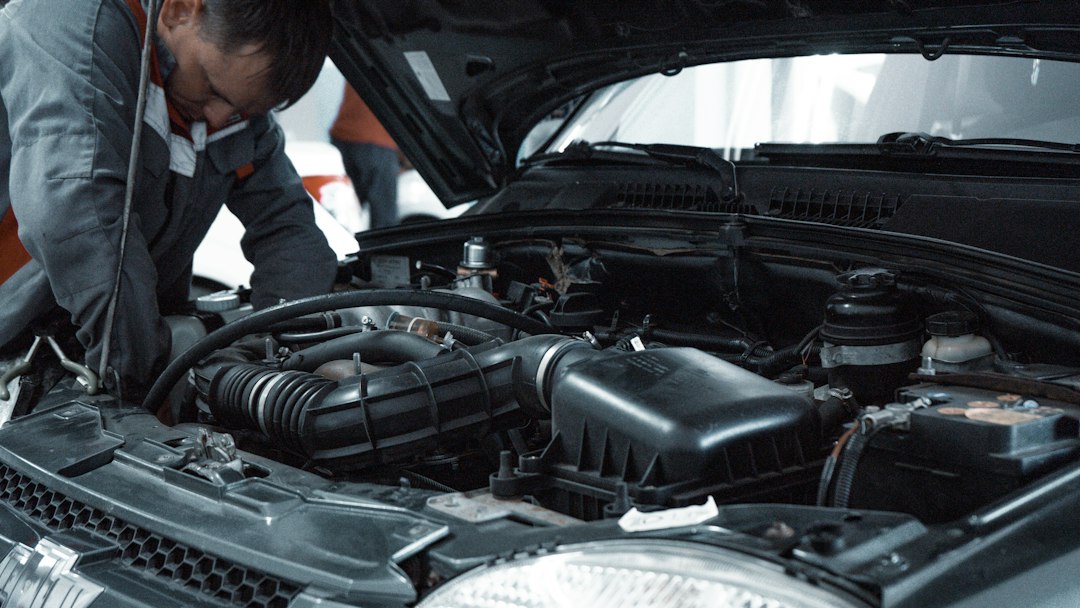
A model with a strong reputation is not automatically a good buy if the individual vehicle has poor records or obvious neglect. A pre-purchase inspection can help turn broad reliability research into a decision about the actual car in front of you.
Compare the problem to your use case
High-mileage commuters, rideshare drivers, short-trip city users, towing owners, and low-mileage weekend drivers place different stresses on a vehicle. A weakness that is tolerable at 7,000 miles per year may be unacceptable at 30,000 miles per year.
Think in terms of total exposure: how often you will use the car, how costly downtime would be, whether you have access to another vehicle, and how much repair reserve you can comfortably keep.
A better reliability checklist
Before buying, identify the generation, review open recalls, look for repeated owner-reported patterns, understand the expensive systems on that vehicle, review maintenance history, obtain an inspection when appropriate, and estimate whether the likely ownership risk fits your budget.
That approach is slower than trusting one score, but it produces a more defensible answer.
Build a reliability evidence stack
Instead of asking one source for a final verdict, build a stack of evidence. Government recall data can reveal safety defects. Manufacturer service information can explain official repair procedures or campaigns. Repair-cost sources can show which systems tend to create expensive ownership events. Long-term owner reports can expose recurring patterns that may not appear in a short road test.
| Evidence source | What it helps answer | Main limitation |
|---|---|---|
| Government recall data | Safety defects and open recall status | Does not measure every reliability problem |
| Manufacturer information | Specifications, campaigns, technical changes | Not an independent ownership score |
| Repair-cost data | Cost exposure and common service patterns | Can vary by region, mileage, and shop rates |
| Owner reports | Recurring real-world symptoms and long-term patterns | Self-selection and incomplete maintenance histories |
For safety recalls in the United States, start with the NHTSA recall database. It is a primary source for recall status and VIN-based checks.

Separate design problems from neglected maintenance
A repeated failure pattern can come from the vehicle itself, but it can also be amplified by poor maintenance, abusive use, incorrect fluids, missed software updates, or previous low-quality repairs. That distinction matters because a model with a known weak point but excellent maintenance history may still be a better purchase than a supposedly “bulletproof” model that has been neglected.
When owner reports mention the same problem, look for consistency: the same generation, similar mileage, the same component, and similar symptoms. One angry review is an anecdote. A recurring pattern across multiple sources is more useful evidence.
Ask what would change the conclusion
Good research is falsifiable. If a reliability conclusion would never change no matter what new evidence appears, it is probably too rigid. New recalls, extended warranties, revised parts, software campaigns, or stronger long-term data can change how a model year should be viewed.
Car Focus therefore treats reliability as a living research question rather than a permanent label attached to a badge.
Rate a problem by severity, frequency, and consequence
“Common” and “serious” are not synonyms. A nuisance infotainment reset reported by many owners can be less important to a buyer than a less frequent failure that strands the vehicle or requires a major repair. Car Focus separates three dimensions before making a reliability judgment.
| Dimension | Question | Why it matters |
|---|---|---|
| Frequency | Does the same failure appear repeatedly for the same generation/configuration? | Helps distinguish a pattern from isolated anecdotes. |
| Severity | Is it cosmetic, inconvenient, drivability-related, safety-related, or catastrophic? | Two equally common problems can carry very different ownership risk. |
| Consequence | What are the likely cost, downtime, parts availability, and repair complexity? | Turns “reliability” into a practical ownership decision. |
Use confidence labels instead of pretending the evidence is perfect
A strong conclusion should state how confident the evidence allows you to be. Multiple consistent sources tied to the same generation and component can support a high-confidence warning. A handful of forum posts without maintenance history should stay a low-confidence signal that needs corroboration. Newer model years also deserve more uncertainty because they have had less time and mileage to accumulate long-term evidence.
Government data helps with safety defects and recalls, but it is not a complete reliability score. For U.S. recall research, NHTSA is a primary source. Manufacturer documents establish specifications and campaigns. Repair-cost data and owner reports add context, while an independent inspection tells you whether the individual vehicle in front of you reflects the broader pattern.
Car Focus reliability standard
We do not claim proprietary testing we did not perform, and we do not convert anecdotes into fake failure rates. When evidence is mixed, we say it is mixed. When a conclusion depends on a particular engine, transmission, battery, trim, mileage band, or production period, we narrow the conclusion instead of attaching it to the entire nameplate.
Frequently asked questions
Can one reliability score tell me which car to buy?
No. A score can be useful context, but it rarely captures trim differences, powertrains, generation changes, maintenance history, repair severity, and the condition of the specific vehicle in front of you.
Are owner forums useless because they are anecdotal?
No. They are useful for discovering patterns and symptoms, but they should not be treated as final proof by themselves. The best use is to identify a repeated claim and then check whether other evidence supports it.
Why does model year matter so much?
Because redesigns, suppliers, engines, transmissions, electronics, and software can change inside one model name. Reliability evidence should be tied as closely as possible to the actual generation and model year being researched.
Related Car Focus research: What a Car Generation Means, How to Check Recalls Before Buying Used, and How to Estimate Repair and Ownership Costs.