Quick answer: Used-car safety technology labels are easy to misread. Automatic emergency braking, forward-collision warning, blind-spot warning, adaptive cruise control and lane-keeping assistance perform different jobs—and their features can change by trim, package, model year and software version. The safest buying method is to confirm which systems the specific vehicle actually has, understand their limitations and check for damage or malfunction without conducting dangerous tests.
Car Focus provides consumer research tools and does not claim to have personally tested or certified a specific vehicle. Official laws, procedures and model-specific details should be verified at the source.
Start with the difference between warnings and interventions
Forward collision warning alerts the driver to a potential crash; automatic emergency braking, or AEB, can apply braking automatically under defined conditions. Blind-spot warning alerts the driver when another vehicle is detected; blind-spot intervention may add steering or braking assistance. Lane departure warning notifies the driver of unintended movement, while lane-keeping assistance can make a steering correction. These distinctions matter when comparing window stickers.
NHTSA’s driver-assistance glossary explains functions rather than endorsing the idea that every system works identically. Automaker naming conventions can obscure capability, so compare the manual’s actual behavior and limits. Do not treat a ‘Safety Sense’ or ‘Driver Assist’ badge alone as proof that a particular feature is installed.
Automatic emergency braking does not prevent every collision
AEB may help avoid or reduce some forward crashes, depending on sensor design, target type, speed, conditions and system calibration. Certain vehicles have separate pedestrian detection functions, and not all early systems operated under the same circumstances. Check the exact trim’s brochure and owner’s manual for functionality. Never assume an older car matches the performance of a new model with a similar feature name.
Do not deliberately drive toward a person, parked car or obstacle to demonstrate AEB during a test drive. You are responsible for braking and avoiding hazards. If an AEB warning or fault indicator is present, ask for professional diagnosis rather than performing risky demonstrations in public traffic.
Blind-spot monitoring and rear cross-traffic warning
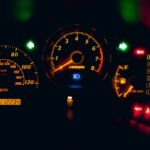
Blind-spot systems generally use sensors to detect certain vehicles in nearby lanes, then display a mirror indicator or sound a warning. Rear cross-traffic warning may alert the driver to movement approaching from the sides while reversing. Coverage areas and reaction times vary by system. A warning light that comes on when the car starts may be part of a normal self-check rather than proof the system is functioning.
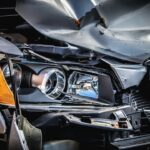
Some sensors are behind bumper panels and can be affected by collision repairs, accessories, dirt or misalignment. Ask whether the vehicle has had bumper replacements or repairs, and whether calibration was performed according to manufacturer requirements. A sensor that is absent, obstructed or disabled should not be represented as active safety coverage.
Adaptive cruise is not self-driving
Adaptive cruise control adjusts speed to maintain a selected following distance from a vehicle ahead under supported conditions. Lane centering may assist with steering within marked lanes. Both are driver-assistance functions, not permission to stop monitoring traffic. NHTSA emphasizes that even advanced consumer driving-assistance systems require the driver to remain attentive.
Some vehicles stop and restart automatically in traffic, while others disengage at low speed. Steering support may depend on clear markings, road curvature and driver input. Read the correct model-year instructions and use authorized controls only as the manufacturer intends. If a seller claims the car ‘drives itself,’ challenge that claim and request documentary support for the installed system.
Check the exact VIN, trim and feature package
A vehicle listing may say ‘automatic braking’ when the car actually provides only an audible warning, or may advertise adaptive cruise on a trim that only has fixed-speed cruise control. Retrieve the original window sticker when available, compare the manufacturer’s specification for that year and verify the controls and sensors in person. Software-based upgrades and optional equipment should be checked against a current account or vehicle configuration record.
The VIN identifies the base vehicle and may help locate manufacturer records, but a generic VIN decoder does not always confirm every driver-assistance option. If the feature is a purchase requirement, obtain confirmation from the manufacturer or dealer service department for the individual car. Our VIN decoding guide explains that distinction.
Understand repairs and calibration costs
Camera, radar and sensor components can require replacement or calibration after certain windshields, bumpers, steering/suspension work or collisions. The requirement and procedure vary by system, manufacturer and exact repair. A cheap used car with damaged ADAS hardware may become costly to restore. Get a written diagnostic report and quote rather than guessing based on an illuminated dash icon.
Avoid generic statements that any windshield replacement always requires calibration or that all calibrations cost the same. Ask what was replaced, whether original procedures were followed and what proof of calibration exists. A clean body panel does not guarantee a concealed radar bracket is properly aligned. Safety-system work deserves trained specialists.
Compare crash ratings and safety technology together
Use IIHS and NHTSA safety information for the correct model year, then examine the specific vehicle’s driver-assistance equipment. A vehicle’s underlying crashworthiness and restraint performance remain essential even with impressive electronic aids. Test criteria and rating systems evolve over time, so scores from different years or protocols may not be directly comparable.
AEB and blind-spot warning should support a responsible driver, not compensate for neglect of tires, brakes or visibility. Confirm recall status by VIN, inspect tires and ask about collision history. If you are comparing two used vehicles, record feature availability, hardware condition and crashworthiness evidence separately.
Safe used-car ADAS evaluation checklist
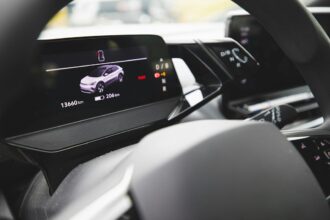
With the car parked, verify the feature names in the manual, menu settings, equipment switches and warning indicators. Ask the seller to demonstrate nonhazardous user-interface behavior such as display menus and normal dashboard messages. On an ordinary legal drive, notice any relevant system alerts that occur naturally, but do not create scenarios solely to test collision avoidance.
For a serious purchase, ask a qualified shop or authorized service department to review diagnostic codes and calibration history when relevant. Compare written findings to the seller’s representations. Use Car Focus’s recall checklist and pre-purchase inspection guide before signing.
Quick-reference checklist
| Feature | Primary function | Important limitation |
|---|---|---|
| FCW | Warns of possible forward collision | Does not apply brakes by itself |
| AEB | Can brake for imminent forward hazard | Performance and conditions vary |
| BSW | Alerts to detected blind-spot vehicle | Does not replace mirror checks |
| ACC | Manages set speed and following distance | Driver remains responsible |
| Lane assist | Warns or steers within operating limits | Not autonomous driving |
Use the table to keep verified documents, repair evidence and questions organized before committing money.
Optional shopping resource: Related vehicle camera and technology accessories may help with everyday driving, but never replace factory safety systems. The links below may generate an affiliate commission.

Frequently asked questions
Does all AEB stop for pedestrians?
No. Verify pedestrian AEB specifically for the car and model year.
Can driver assistance replace attention?
No. Drivers must monitor traffic and remain in control.
Can past collision repair affect radar or cameras?
Yes. Ask whether relevant components were repaired or recalibrated to manufacturer procedures.
Primary sources and editorial method
The following resources support safety-system definitions, buyer rights and the recommended verification steps. Manufacturer specifications and local laws may vary.