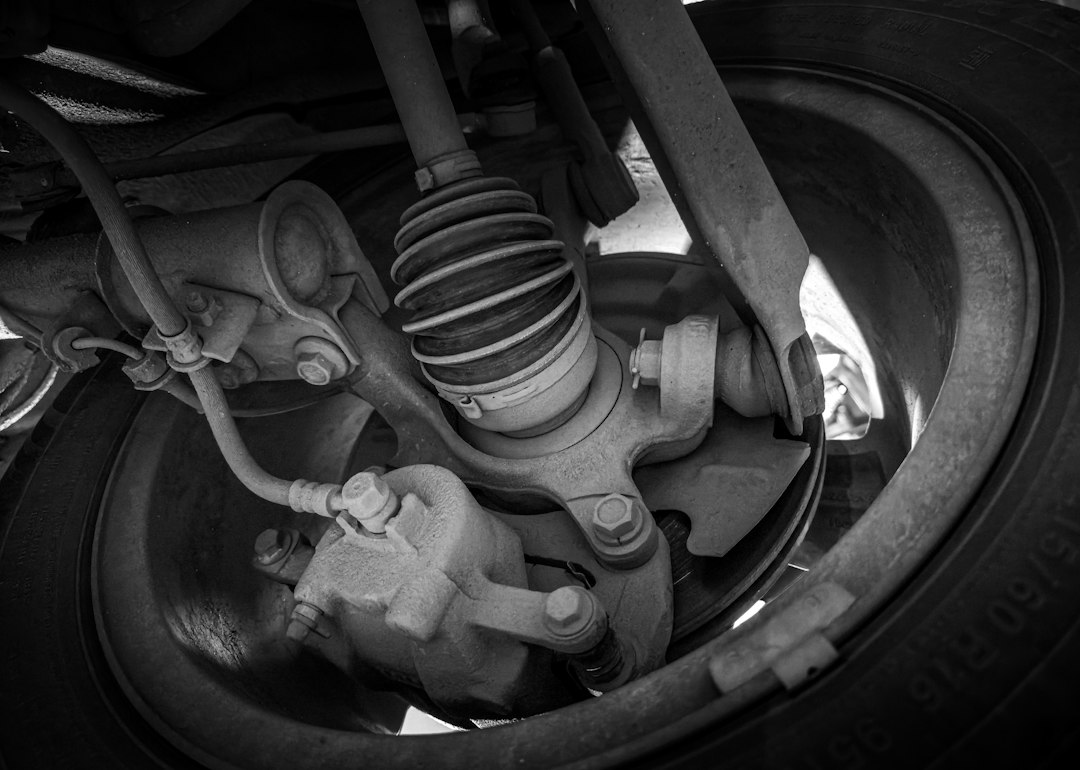
Quick answer: A clunk over a bump, squeal when turning or vibration through the steering wheel should never be dismissed as normal just because a used car has mileage. Suspension and steering systems keep the tires controlled and the vehicle responsive, but noises can have several different causes. Rather than buying a used car based on a seller’s guess that it ‘just needs bushings,’ document the symptom and commission a safe professional inspection of joints, mounts, springs, dampers and related hardware.
Editorial method: Car Focus uses cited public sources and a buyer-first analysis framework. No particular vehicle was personally tested, and figures are illustrations rather than price or reliability guarantees.
Suspension and steering parts have different jobs
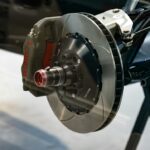
Struts and shocks control oscillation; springs carry weight; control arms and bushings locate the wheels; ball joints and tie-rod ends allow controlled steering movement. Wheel bearings support wheel rotation, while stabilizer-bar links manage aspects of body roll. A noise can originate from more than one part, so a component name alone does not diagnose it.
On certain suspensions, a strut also has structural steering or wheel-location functions, making its mounting condition important. Identify the exact chassis and drivetrain. An AWD model can have different shafts, joints and packaging from a front-wheel-drive version.
Use normal-speed observations instead of risky maneuvers
During a permitted test drive on ordinary roads, note whether a clunk appears over bumps, during turning, on acceleration or while braking. Record road surface, temperature, speed and whether the steering wheel vibrates. Do not intentionally hit curbs, perform abrupt steering or drive an apparently unsafe car to reproduce a noise.
Intermittent sounds are difficult to diagnose, so a short audio recording may help a technician if safely captured by a passenger. A rattle from loose cabin trim can resemble a suspension sound, but an unstable or wandering steering feel requires immediate safety attention.
Ball joints and tie rods are safety-critical when worn
Loose ball joints or steering-linkage components can affect wheel control, alignment and vehicle handling. Some designs allow limited movement while others have specified inspection limits. A qualified technician should use approved procedures and supporting equipment rather than guess from a quick push on the tire.
Avoid crawling beneath a jack-supported car or prying at components without proper vehicle support. Ask the inspector for photographs, actual measurements where applicable, and a clear roadworthy/unsafe judgment. Serious looseness near a steering or wheel-retention component can be a reason not to drive the vehicle.

Shocks and struts affect control, not only comfort
Worn dampers can contribute to excessive body motion and reduced wheel contact in some conditions. Visible leaking fluid, damaged rods or mounts, broken springs and abnormal tire wear should be investigated. However, a car that feels soft may simply be designed for comfort; compare to manufacturer condition standards.
Ask whether replacement is recommended for verified defects and whether related mounts or alignment services are included. Replacing front struts is not automatically the correct answer to every noise or vibration, especially if the real problem is a tire or wheel bearing.
Wheel bearings and CV joints may mimic suspension problems
A humming noise that changes with speed, clicking while turning or vibration under power can arise from bearings, axle joints, tires and other sources. These patterns are clues, not complete diagnoses. A technician should assess the wheel assembly and drivetrain under safe conditions.
An engine mount or exhaust hanger can also create clunks during torque changes. Ask the mechanic to explain why the observed symptom points to the proposed part, and whether further diagnostic time is needed before ordering replacements.
Look for alignment and uneven tire wear
Feathered tread, one-sided wear and a crooked steering wheel can indicate geometry or maintenance issues, but tire inflation, road damage and bent parts must be considered. A routine alignment cannot correct severely worn control-arm joints or damaged structural mounting points. Repair defective components before performing a final alignment where appropriate.
Review the tire-wear checklist and check if suspension repair invoices include alignment. Several tires showing similar abnormal wear may indicate a recurring underlying problem rather than a simple tire-choice issue.
Demand a written itemized estimate
For confirmed defects, request a quote identifying affected corners, replacement part quality, labor, any alignment, and a warranty. Some repairs should be paired based on wear or manufacturer guidance; others do not require replacing every component. A quote that names ‘front end’ without individual findings is inadequate for a major purchase.
Compare repair cost against similar inspected cars, and include tires damaged by poor geometry if replacement is necessary. The repair-cost planning guide helps avoid bargaining from arbitrary internet prices.
Go/no-go decision
A minor isolated bushing squeak with a credible diagnosis can be priced into an otherwise healthy vehicle. A car that wanders, clunks severely, has loose steering parts or has been altered by collision repairs should be evaluated for safety before purchase or further driving.
Choose transparency, professional findings and an affordable remedy over seller assurances. If a seller refuses inspection or the mechanic reports a critical defect, a competing car is often the better choice.
Buyer decision table
| Symptom | Possible systems | What to request |
|---|---|---|
| Clunk over bumps | Links, bushings, mounts | Suspension joint inspection |
| Humming with speed | Bearing or tire | Wheel and tire diagnosis |
| Steering looseness | Tie rods, joints, rack | Safety judgment |
| Uneven tire wear | Alignment or worn parts | Tread measurements, alignment |
| Vibration on acceleration | Axle, mounts, tires | Model-specific diagnosis |
Frequently asked questions
Is a clunk always a bad strut?
No. Several suspension, steering and even non-suspension parts can create similar sounds.
Can alignment fix worn ball joints?
No. Safety-critical worn components need proper repair.
Can I test this by rocking a car on a jack?
Do not work beneath or manipulate a car supported only by a jack. Use a professional.