Quick answer: A replaced windshield can be a routine glass repair, but on cars with windshield-mounted cameras it may also affect lane-departure warnings, automatic emergency braking and other driver-assistance functions. Whether recalibration is required depends on the manufacturer, vehicle design, glass replacement procedure and camera mounting. A clean windshield and an unlit warning light do not prove that every safety system was restored properly. Used-car buyers should verify equipment, relevant repair records and any required post-replacement calibration.
Editorial method: This is a research-based verification guide; Car Focus did not test a specific windshield or vehicle camera for this article.
Identify the actual driver-assistance equipment
Ask for the VIN, model year, trim, factory equipment list and owner’s manual. Some cameras sit near the rearview mirror behind the windshield, while other vehicles use radar, bumper sensors or different camera locations. A feature advertised as ‘lane assist’ might have a different sensor arrangement from another car with the same marketing label.
Confirm whether the specific vehicle actually has lane keeping, lane departure warning, forward collision warning, automatic emergency braking or traffic-sign recognition. Never assume these functions are installed solely because a camera-like housing is visible. The NHTSA driver-assistance glossary explains what the functions do and their limits.
Why glass replacement can matter to cameras
Some ADAS cameras look through a defined portion of the windshield. The glass, bracket location, optical clarity and camera orientation can affect their view. Replacing the windshield may require a manufacturer-specified calibration or inspection procedure. Other repairs, including steering alignment or suspension work, may also lead to recalibration requirements on certain vehicles.
There is no single rule that every windshield replacement requires calibration on every car. What matters is the exact manufacturer procedure for the model and equipment. An experienced auto-glass or dealer service department should identify whether it calls for static targets, a dynamic road procedure, both or a different check.
Review the glass-repair invoice carefully
Ask whether the windshield is original or has been replaced, and request the invoice. Useful records include the glass type, part number, date, shop name, camera handling, any relearn or calibration performed and documented results. A seller may not have the record; that increases uncertainty, especially after collision or insurance repairs.
An aftermarket windshield is not automatically unsafe, but it must meet applicable standards and be appropriate for the vehicle’s required systems. An invoice that says ‘glass installed’ without camera information does not establish a successful camera calibration. Ask the repairer to clarify the process if the ADAS equipment is present.
Calibration and fault diagnosis require qualified tools
Static calibration may use precisely positioned targets and controlled measurements; dynamic calibration can use specified driving conditions according to manufacturer procedures. Specialized software, targets, floor level and technician training may be relevant. A generic check-engine scan or dashboard message does not confirm the optical alignment of a windshield camera.
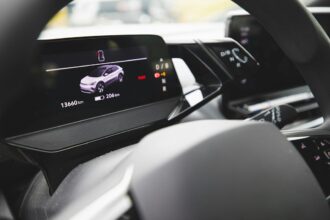
Never ask a seller to demonstrate emergency braking by approaching an obstacle or pedestrian. Those systems assist drivers only within defined conditions. If warning icons, ‘camera unavailable’ messages or inconsistent driver-assistance performance occur during ordinary operation, arrange diagnosis rather than treating the issue as a cosmetic nuisance.
Examine glass and body repair clues
Inspect the windshield for cracks, distortion, chips in the driver’s field of view, water leaks and poor weather sealing. Look for detached trim, damaged mirror housings and unusual adhesive residue. The presence of a replacement windshield alone does not establish that a crash occurred; stone damage is common. But replacement after collision repair may require broader inspection.
Ask whether the roof edge, A-pillars or camera mount were repaired and whether any adjacent structural work was performed. A collision specialist may be appropriate when body damage is suspected. Our accident-damage inspection guide explains how to distinguish visible repair clues from professional structural assessment.
Understand what the driver must still do
Even correctly calibrated driver-assistance systems have limitations in snow, glare, heavy rain, lane-marking quality and other conditions. NHTSA makes clear that such technologies do not turn the vehicle into a self-driving car. Calibration cannot compensate for dangerous driving, bad tires or inattentiveness.
Test dashboard settings and controls only in safe normal use. Verify the owner’s manual’s warnings and use conditions. If cameras are blocked by accessories, tint, cracks or dirt, ask whether performance is affected and avoid placing objects where they obstruct necessary sensor views.
Calculate possible repair exposure before purchase
A windshield replacement or camera calibration cost varies by vehicle, sensor design, glass availability, market and procedure. Do not use a single internet quote as your repair budget. If a calibration appears missing, obtain a written inspection and quote from a competent shop familiar with the exact model.
Discuss whether the seller will correct the problem before sale, or whether you should find another vehicle. A dealer warranty or service contract may exclude glass and certain calibration work. Get all obligations in writing. Also obtain insurance quotes for the exact car and ask how future glass claims are treated.
The final windshield and ADAS checklist
Confirm equipment by VIN and build record; inspect windshield condition; request glass-replacement documents; verify manufacturer-specified camera inspection or calibration where required; check dash warnings and ordinary feature availability; and request specialist evaluation of unresolved faults. Record the findings in the vehicle’s purchase file.
This is a focused companion to our ADAS function guide and the independent inspector selection guide. Buying a used car with complex safety equipment requires evidence beyond a clean dashboard.
ADAS repair verification worksheet
| Document or check | What it helps establish | Limit |
|---|---|---|
| Equipment build record | Which ADAS features exist | Not proof they work |
| Windshield replacement invoice | Glass and repair history | May omit calibration |
| Calibration report | Manufacturer procedure performed | Scope differs by system |
| Normal feature display | User interface operation | Not a certified safety test |
| Specialist inspection | Current faults or concerns | Cannot guarantee future operation |
Frequently asked questions
Do all windshield replacements require ADAS calibration?
No universal rule applies. Follow the specific vehicle manufacturer’s required procedure.
Does an unlit dashboard warning prove cameras are calibrated?
No. Normal-looking controls are not a substitute for required calibration evidence.
Can I test AEB by driving toward something?
No. Do not deliberately create collision scenarios. Seek qualified diagnosis.